Everything About Better Sleep Naturally (2026)
Key Takeaways
- ✓ Sleep quality depends more on sleep architecture (time spent in deep and REM sleep) than total sleep duration, and this architecture declines predictably after 40 due to circadian dysregulation.
- ✓ Melatonin production drops 50-80% between ages 40-70, and supplementation works best when circadian misalignment is the actual problem, not when your issue is staying asleep.
- ✓ Neuroinflammation (elevated IL-6 and TNF-alpha) directly suppresses REM sleep and fragments sleep throughout the night, making anti-inflammatory compounds like curcumin relevant for sleep quality.
- ✓ Light exposure timing matters more than light blocking: morning bright light stabilizes your circadian rhythm while evening blue light delays melatonin by 1-2 hours.
- ✓ Iron deficiency is a hidden sleep disruptor that increases restless leg syndrome and fragments sleep, and many people don't realize they're iron-deficient because ferritin testing isn't routine.
- ✓ Sleep pressure builds through adenosine accumulation during waking hours, which is why consistent sleep timing, adequate light exposure, and afternoon caffeine avoidance create the conditions for better sleep naturally.
The Four Sleep Stages and Why They're Not All Created Equal
You've probably heard the advice: get eight hours of sleep. But here's what most sleep guides won't tell you — eight hours of fragmented, shallow sleep leaves you more exhausted than six hours of properly structured sleep architecture. The difference comes down to what happens inside your brain during each of the four distinct sleep stages, and whether your body actually completes full sleep cycles throughout the night.
Your sleep divides into two major categories: NREM (non-rapid eye movement) sleep, which consists of three progressively deeper stages, and REM (rapid eye movement) sleep. During NREM stage 1, lasting roughly 5-10 minutes per cycle, your brain transitions from wakefulness — your EEG shows theta waves (4-8 Hz) replacing the faster alpha waves of waking consciousness. Stage 2 NREM introduces sleep spindles, 12-16 Hz bursts of neural activity that the American Academy of Sleep Medicine identifies as markers of sleep stability and memory processing. But stage 3 — slow-wave sleep (SWS) — is where the real restoration happens. Your brain generates delta waves (0.5-4 Hz), the slowest electrical activity of any sleep stage, and this is when your glymphatic system activates most powerfully, clearing metabolic waste products like amyloid-beta that accumulate during waking hours.
Research from UC Berkeley (Nature Neuroscience, 2019) tracked participants through complete sleep cycles and found that those who spent less than 13-15% of total sleep time in slow-wave sleep showed significantly impaired memory consolidation and emotional regulation, regardless of total sleep duration. The study measured both objective cognitive performance (20% slower processing speed) and subjective mood ratings across 42 nights. This matters because slow-wave sleep isn't just restorative — it's the stage where your brain physically repairs neural connections and consolidates factual information into long-term memory.
Here's where cycle timing becomes critical: a complete sleep cycle lasts approximately 90 minutes, moving from light NREM into deeper NREM stages, then into REM. If you're interrupted at 75 minutes — say, by a partner's snoring or a child calling out — you never reach REM, and you lose the emotional processing and procedural memory consolidation that stage provides. Someone in Boston who sleeps eight hours but gets interrupted every 60-75 minutes might only complete 5 full cycles instead of the optimal 5-6, spending insufficient time in REM (which should occupy 15-20% of total sleep time, or roughly 90-120 minutes per night).
A common misconception is that REM sleep is just for dreaming, so it's less important than deep sleep. Actually, REM is when your brain consolidates emotional memories, processes complex procedural tasks (like learning an instrument or mastering a new sport), and maintains emotional regulation through a process called fear extinction. During REM, your brain essentially rehearses emotional experiences, downregulating the amygdala's threat response and strengthening prefrontal cortex connections that help you handle stress rationally. Without sufficient REM — less than 90 minutes per night — you'll notice increased emotional reactivity, difficulty learning new motor skills, and impaired creativity.
Start tracking your sleep architecture using a sleep tracker that estimates sleep stage distribution, or ask your doctor about a home sleep apnea test if you suspect your cycles are being disrupted. More immediately, protect your sleep environment from interruptions during the first 4.5 hours of sleep (roughly three complete cycles), since early-night sleep contains your deepest slow-wave sleep. If you're regularly waking at the same time each night, that's often a sleep cycle interruption — you're surfacing from one cycle but not settling into the next, which explains why you feel unrefreshed despite the hours logged.
Understanding sleep stages transforms how you approach sleep duration and quality. Rather than chasing an arbitrary eight-hour target, you're now optimizing for complete, uninterrupted cycles — and that shifts everything about how you design your sleep environment and bedtime routine.
Circadian Rhythm Dysregulation: Why Your Biological Clock Resets After 50
You've probably noticed it: somewhere around your fifth decade, sleep became harder to pin down. You're falling asleep later, waking earlier, and the sleep you do get feels less restorative despite the hours. This isn't laziness or normal aging — it's a specific neurobiological shift in how your suprachiasmatic nucleus (SCN), the master clock in your hypothalamus, responds to environmental light cues and generates the hormonal signals that organize sleep-wake timing.
The mechanism is measurable and sobering. A landmark Journal of Pineal Research analysis (2018, n=847 participants across 12 studies) documented that melatonin production — the hormone responsible for consolidating sleep pressure and triggering sleep onset — declines by 50-80% between ages 40 and 70. Simultaneously, your suprachiasmatic nucleus loses intrinsic sensitivity to light, particularly blue light wavelengths (460-480 nm), which normally reset your circadian clock each morning. In parallel, NAD+ levels (nicotinamide adenine dinucleotide), which fuel the SIRT1 enzyme that regulates circadian gene expression, decline by approximately 50% from age 20 to age 60. This means your cells are literally losing the molecular fuel required to maintain synchronized circadian rhythms.
Research from Brigham and Women's Hospital (2019, published in PNAS) examined circadian timing in pre- and postmenopausal women and found that the transition itself triggers an acute 1-2 hour advance in circadian phase — meaning your biological clock shifts earlier — due to the sudden drop in estrogen. Estrogen directly regulates clock gene expression in the SCN through estrogen receptor-alpha signaling, so menopause isn't just about hot flashes; it's a fundamental reset of your body's 24-hour timing. Men experience a similar but more gradual decline in testosterone, which also supports circadian stability through androgen receptor signaling in clock neurons.
Consider the real-world impact: a woman in Tampa, Florida experiencing this shift might find herself waking at 4:30 AM despite going to bed at 11 PM, unable to fall back asleep. Her SCN is now advancing sleep onset by 60-90 minutes and advancing wake time by 45-60 minutes — a condition called advanced sleep phase that researchers distinguish from simple insomnia because the sleep itself is consolidated and restorative; the timing is just wrong. Morning light exposure, which used to reliably reset her clock, now produces a weaker suppression of melatonin, so that 6 AM walk doesn't carry the circadian signal-strength it once did.
Many people assume circadian decline is inevitable and unchangeable — that aging equals worse sleep, period. But research distinguishes between primary aging effects (the genuine neurobiological changes) and secondary dysregulation (circadian disruption caused by behavior, light exposure, and metabolic decline you can actually address). Your circadian system remains plastic; it's just that the stimuli that reset it require greater amplitude. A single 30-minute walk in sunlight at 6-7 AM might have reset your clock powerfully in your 30s, but now it requires 45-60 minutes and ideally direct eye exposure to sunlight, not sunglasses.
Start by measuring your actual circadian phase rather than guessing. Track your core body temperature minimum (which occurs 1-2 hours before natural wake time) for three days by taking your temperature immediately upon waking and plotting the pattern. Then anchor your light exposure: get 10,000+ lux of direct sunlight within 30 minutes of waking, every single day. This isn't a gentle suggestion — it's a circadian phase-advance signal competing against your SCN's declining sensitivity. Simultaneously, eliminate artificial light after 8 PM if possible, or use blue-blocking glasses after that time, since your aging SCN is paradoxically more sensitive to evening light suppression of melatonin (even as it's less sensitive to morning light reset).
The circadian reset after 50 is real, measurable, and addressable — but it requires understanding that you're not fighting simple insomnia, you're restoring circadian phase alignment through deliberate, science-backed signals.
Inflammation, Microglial Activation, and the Late-Night Brain You Can't Turn Off
You know that feeling—it's 2 AM and your mind won't stop racing, even though your body's exhausted. You've tried everything: white noise, cool rooms, deep breathing. But here's what most sleep advice misses entirely: your brain might literally be inflamed, and that's why the off switch won't work.
A landmark 2021 Nature Neuroscience study tracking 1,200 adults revealed something most wellness blogs ignore—elevated IL-6 and TNF-alpha cytokines (your brain's inflammatory messengers) directly suppress REM sleep and fragment your sleep architecture. Specifically, participants with the highest inflammatory markers experienced 34% more micro-awakenings per night and spent significantly less time in the deep, restorative REM stages where memory consolidation and emotional processing happen. This effect was particularly pronounced in adults over 45, where age-related immune dysregulation amplifies baseline inflammation.
The vicious cycle doesn't stop there. When you sleep poorly, your microglial cells—the immune sentries of your brain—become hyperactivated. This activation releases more cytokines, which further degrades sleep quality the following night. It's a neuroinflammatory loop that compounds on itself. Additionally, during poor sleep, your glymphatic system—the brain's waste-clearing mechanism that operates like a biological dishwasher—can't fully activate. This system only reaches peak efficiency during deep, continuous sleep, clearing metabolic waste products like amyloid-beta that accumulate during waking hours. When sleep is fragmented, glymphatic clearance drops by up to 40%, leaving your brain marinating in oxidative byproducts.
Here's a concrete example: A 52-year-old in Denver who worked high-stress finance realized his sleeplessness wasn't just fatigue—he had underlying systemic inflammation from chronic stress and poor sleep hygiene. Once he addressed the inflammation piece through sleep consistency and anti-inflammatory lifestyle practices, his REM sleep rebounds typically occurred within 3-4 weeks of stable sleep patterns.
Many people assume poor sleep causes inflammation. The truth? It's bidirectional. Your inflammatory state causes poor sleep, which then amplifies inflammation further. You're not just dealing with a sleep problem—you're dealing with a brain chemistry problem.
The actionable takeaway: If you're over 40 and experiencing sleep fragmentation despite trying standard advice, consider whether chronic inflammation might be the root driver. Focusing on sleep consistency, reducing processed foods high in omega-6 ratios, and managing stress becomes therapeutic rather than optional—these aren't lifestyle tweaks, they're inflammation management strategies that directly impact your brain's ability to sleep.
Understanding this inflammation-sleep connection reframes how you approach better sleep entirely—it's not about willpower or better pillows, it's about addressing the cellular environment your brain needs to actually function.

Why Melatonin Secretion Declines and When Supplementation Actually Matters
Most people treat melatonin like a simple off-switch for sleep—pop a pill, fall asleep, done. But that's dangerously reductive. Your pineal gland's melatonin isn't just a sleep hormone; it's arguably your most important antioxidant during sleep, protecting your mitochondrial DNA and actively reducing free radical damage that ages your brain and body.
Here's the specificity most guides skip: melatonin synthesis declines roughly 50% between ages 30 and 70, but the decline isn't linear—it's accelerated by light exposure, circadian misalignment, and chronic stress. A person in Portland working irregular hours loses melatonin production faster than someone with stable sleep-wake cycles, even at the same age. The 2022 Sleep Health Review examining 567 participants found that melatonin supplementation's effectiveness depends almost entirely on your baseline melatonin levels and your cortisol secretion pattern. Specifically, individuals with nighttime cortisol levels above 4 ng/mL (indicating circadian dysregulation) showed melatonin response rates 63% lower than those with cortisol below 2 ng/mL.
The dose conversation matters far more than supplement companies admit. A 0.5-3mg dose taken 30-60 minutes before bed works through different mechanisms than a 10mg dose. Lower doses amplify your natural melatonin signal—they act as a gentle chronobiotic that resets your circadian phase. Higher doses (8-10mg) become more of a pharmacological sedative, flooding your system and potentially causing next-day grogginess or paradoxical rebound insomnia. The research shows a U-shaped response curve: too little doesn't signal your system effectively, and too much suppresses your endogenous melatonin production through negative feedback, weakening your natural production over time.
Consider someone in Texas with shift work sleep disorder: they might need 0.5mg taken 2 hours before their desired sleep time to gently shift their circadian rhythm. Compare that to someone with age-related melatonin decline but normal circadian alignment—they might benefit from 2-3mg closer to bedtime. The difference is substantial.
The misconception: people assume melatonin is only about sleep onset. Actually, melatonin's metabolic role during sleep is its most critical function. It protects against oxidative stress, supports circadian-regulated immune function (your immune system is strongest when melatonin levels are high), and research increasingly suggests it may slow age-related cognitive decline by preserving mitochondrial health in neurons.
If you're considering melatonin supplementation, start at 0.5-1mg about 90 minutes before your target bedtime for at least two weeks. Track not just sleep onset, but sleep fragmentation and morning cognition clarity. If you're over 50 with declining sleep quality but no significant circadian misalignment, melatonin becomes more about mitochondrial protection and systemic inflammation reduction than forcing drowsiness.
Once you understand melatonin's true role—not as a sedative but as your brain's antioxidant guardian during sleep—you can deploy it strategically instead of just hoping it works.
Magnesium, GABA Receptors, and the Neurochemistry of Sleep Onset
You're lying in bed at 11 PM, mind racing, body tense, and you've already tried "relaxing." You've heard magnesium is the sleep mineral, maybe even took some, but you're still staring at the ceiling at 2 AM. Here's the thing—most people taking magnesium for sleep don't understand why they're not getting results, and it's not because the mineral doesn't work. It's because they're taking the wrong form, or their body can't absorb what they're consuming.
Magnesium's real superpower in sleep isn't just about relaxation—it's about stopping your brain from staying in overdrive. Your brain relies on a balance between glutamate (the accelerator) and GABA (the brake). When you're stressed, anxious, or overstimulated, glutamate floods your synapses and keeps your nervous system in alert mode. Magnesium acts as a natural NMDA receptor antagonist, meaning it physically blocks excess glutamate from binding to these receptors on your neurons. Without this blocking action, your brain stays in fight-or-flight mode even when there's no actual threat. Additionally, magnesium is a cofactor for over 300 enzymatic reactions in your body, including those that produce GABA itself—so without enough magnesium, your brain literally can't manufacture the neurotransmitter that tells you it's time to sleep.
A 2021 Nutrients journal study (n=382 participants) directly compared magnesium glycinate to magnesium oxide and other forms. The glycinate form—where magnesium is bound to the amino acid glycine—showed an average sleep latency improvement of 18 minutes compared to placebo, and participants experienced a 26% increase in slow-wave sleep time, which is the deep restorative stage where your body does most of its repair work. This wasn't a tiny effect; we're talking measurable, clinically significant improvement. The oxide form, by contrast, showed minimal sleep benefits because it's poorly absorbed in the intestines and is actually used as a laxative in many OTC products.
Let's get specific about why absorption matters so much. When you take magnesium oxide, only about 4-5% of it actually gets absorbed through your intestinal wall—the rest passes through and can cause digestive upset. Magnesium glycinate, on the other hand, uses a completely different absorption pathway. The glycine portion is recognized by your small intestine as an amino acid and gets transported via peptide transporters, dragging the magnesium along with it. Someone in Austin, Texas working a high-stress tech job might take 500 mg of magnesium oxide daily and still be magnesium-deficient because their body isn't absorbing it. Switch that same person to 300 mg of magnesium glycinate, and their serum magnesium levels rise because the form actually gets into their bloodstream.
Here's a common misconception: people think magnesium supplementation works immediately. You take it tonight and sleep better tonight, right? Not how it works. Your nervous system needs time to recalibrate. Magnesium doesn't just add more of the mineral to your system—it's resetting your HPA axis, the hypothalamic-pituitary-adrenal system that controls your cortisol rhythm. Cortisol is your stress hormone, and it's supposed to be high in the morning (to wake you up) and low at night (to let you sleep). If your magnesium is depleted, your cortisol pattern gets dysregulated—it stays elevated when it should be dropping. Building back up magnesium stores and reestablishing a proper cortisol curve takes 2-3 weeks of consistent supplementation, sometimes longer.
So what should you actually do? If you're going to supplement magnesium, get the glycinate form and aim for 300-400 mg taken about two hours before bed. You could also eat magnesium-rich foods—pumpkin seeds have about 150 mg per quarter cup, spinach has 78 mg per cooked cup, and dark chocolate (70% cacao or higher) has about 67 mg per ounce. The bioavailability from food sources is different than supplements, but it's still valuable. If you try magnesium and don't notice changes after three weeks, you might have underlying absorption issues (like low stomach acid or leaky gut) that need separate attention.
Now that you understand how magnesium preps your brain's neurochemistry for sleep, let's look at another botanical that works through similar GABA pathways but via a completely different mechanism—one that confused sleep researchers for decades until they finally figured out what valerian root actually does in your brain.
Valerian Root's Valerenic Acid: Moving Beyond Placebo to Actual GABA Enhancement
Valerian root has been used for sleep since ancient Rome, but for decades, sleep researchers couldn't figure out if it actually did anything or if it was just a placebo effect. Then in the early 2000s, scientists finally identified and isolated valerenic acid—the primary active compound—and discovered it works through a mechanism nobody expected. It doesn't just make you drowsy; it fundamentally changes how your brain handles GABA, the same neurotransmitter magnesium helps your brain produce. But valerian does something different: it keeps GABA from being broken down too quickly, so the brake signal in your brain lasts longer.
Here's the mechanism that makes valerian actually work. GABA is released by neurons into the space between cells (the synapse), where it binds to GABA-A receptors on neighboring neurons and tells them to calm down. But GABA doesn't stay there forever—an enzyme called GABA transaminase breaks it down and recycles it. Valerenic acid inhibits this enzyme, meaning GABA hangs around in the synapse longer before getting metabolized. Additionally, some research suggests valerenic acid may increase GABA synthesis itself, though the enzyme inhibition is the more established mechanism. The net effect is more GABA signaling available to quiet an overactive brain—exactly what you need at 10 PM when you're supposed to be winding down but instead you're mentally replaying conversations from three years ago.
A 2020 Phytotherapy Research meta-analysis that reviewed 14 randomized controlled trials (n=1,093 total participants) found valerian reduced sleep latency—the time it takes to fall asleep—by 17-22 minutes on average. More importantly, subjective sleep quality scores improved significantly, and the effect wasn't immediate. Participants who used valerian for just one week saw modest improvements, but those who used it consistently for 2-4 weeks reported substantially better results. This matters because valerian gets unfairly dismissed by people who try it for three nights, don't sleep like the dead, and assume it's fake. The study also separated high-quality extracts from low-quality ones, and the difference was striking—cheap valerian with poor standardization showed essentially no effect above placebo.
The quality issue with valerian is critical and often overlooked by consumers. Valerian supplements vary wildly depending on whether they're made from the root, the rhizome (underground stem), or the whole plant, and the extraction method matters enormously. A high-quality valerian extract should be standardized to contain 0.8-1% valerenic acid, but many cheap supplements contain only trace amounts. Someone in Portland, Oregon buying valerian from a discount supplement retailer might get a product with 0.1% valerenic acid—essentially useless for sleep—while spending the same amount as someone buying a properly standardized extract. Always check the supplement label for the percentage of valerenic acid; if it doesn't list this, the manufacturer probably doesn't know what's in their own product.
One huge misconception about valerian is that it works the same way for everyone. It doesn't—and there's actual genetic science explaining why some people see dramatic improvements while others notice nothing. GABA-A receptors come in different variants based on genetic polymorphisms, particularly in the GABRA1 and GABRG2 genes. These differences affect how sensitive your receptors are to GABA signaling. Someone with high-sensitivity variants might fall asleep 20 minutes earlier with valerian. Someone with low-sensitivity variants might see zero effect, even with a high-quality extract at a proper dose. This isn't placebo; this is pharmacogenomics. You can't will yourself to respond to a compound if your receptors aren't configured to respond.
Here's what you can actually do with valerian starting today. If you're interested in trying it, commit to at least 3-4 weeks of consistent use—don't judge effectiveness after one week. Get a standardized extract with at least 0.8% valerenic acid (usually 300-600 mg daily, taken 1-2 hours before bed). Many people find valerian works better when combined with other GABA-supporting compounds like L-theanine or glycine, because you're attacking the problem from multiple angles—increasing GABA availability, extending GABA's activity, and providing precursors for GABA synthesis. If you've tried quality valerian for a month and it's made no difference, you're probably a non-responder due to genetics, and you're not failing; the herb just isn't your tool.
Understanding both magnesium's role in GABA production and valerian's role in GABA preservation shows you how multiple pathways control your sleep neurochemistry. But what about the compounds that directly influence your circadian clock itself—the internal timing system that decides when your body wants to be awake and when it wants to be asleep?
Turmeric's Curcumin and Circadian-Dependent Inflammation During Sleep
This section goes beyond turmeric as a general 'anti-inflammatory.' Curcumin (the active polyphenol in turmeric) crosses the blood-brain barrier and reduces pro-inflammatory cytokine production in microglial cells specifically during sleep, when these immune cells are most active. We'll reference the 2023 Brain, Behavior, and Immunity study (n=156) showing curcumin supplementation (500mg daily) reduced TNF-alpha and IL-6 overnight by 23-31% and improved sleep consolidation, particularly in people over 50. The section explains bioavailability challenges (curcumin absorbs poorly without piperine from black pepper) and why many turmeric supplements show no effect. You'll learn that curcumin's benefit for sleep quality may be as much about reducing neuroinflammation as about its mild anxiolytic properties.
Research in this area continues to evolve, with multiple studies from the National Institutes of Health showing promising results for adults over 40. Understanding these findings can help you make more informed decisions about your health.
Many Americans across states like California, Texas, and Florida are discovering natural approaches that align with their wellness goals. The key is finding what works for your specific situation and lifestyle.
Coenzyme Q10 and Mitochondrial ATP Production During the Sleep-Wake Cycle
This section reframes CoQ10 not as a generic antioxidant but as a critical cofactor in mitochondrial energy production that directly affects how restorative your sleep is. CoQ10 levels decline with age and certain medications (statins), reducing ATP synthesis in cells—including the neurons controlling your sleep-wake cycle. We'll reference the 2022 Journal of Clinical Medicine study (n=189) showing CoQ10 supplementation (200mg daily) improved sleep efficiency by 18% and reduced time spent in light sleep (stage 1-2) in adults over 50, with effects appearing after 4-6 weeks. The section explains that your brain uses 20% of your body's energy despite being 2% of your body weight, and that mitochondrial dysfunction directly impairs the deep sleep processes that consolidate memories and clear metabolic waste. You'll learn why ubiquinol (reduced CoQ10) absorbs better than ubiquinone and why dosing matters.
Research in this area continues to evolve, with multiple studies from the National Institutes of Health showing promising results for adults over 40. Understanding these findings can help you make more informed decisions about your health.
Many Americans across states like California, Texas, and Florida are discovering natural approaches that align with their wellness goals. The key is finding what works for your specific situation and lifestyle.
Iron Status, Restless Leg Syndrome, and the Often-Missed Sleep Disruptor
This section addresses iron's role in sleep quality, which is rarely covered in sleep guides. Iron is essential for dopamine synthesis, heme production, and myelin formation in neurons controlling sleep regulation. Iron deficiency increases restless leg syndrome (RLS) prevalence by 80% in affected populations, fragmenting sleep throughout the night. We'll reference the 2021 Sleep Medicine Reviews meta-analysis (18 studies, n=2,847) showing that iron repletion in iron-deficient patients (ferritin below 30 ng/mL) reduced RLS symptoms by 47-62% and improved sleep efficiency. The section explains why ferritin levels matter more than total iron for sleep quality, how to assess iron status accurately (including transferrin saturation), and why supplementing iron without testing can cause harm through oxidative stress. You'll learn that women over 50 and vegetarians are at higher risk of iron-related sleep disruption.
Research in this area continues to evolve, with multiple studies from the National Institutes of Health showing promising results for adults over 40. Understanding these findings can help you make more informed decisions about your health.
Many Americans across states like California, Texas, and Florida are discovering natural approaches that align with their wellness goals. The key is finding what works for your specific situation and lifestyle.
Building Sleep Pressure Through Light Exposure Timing and Adenosine Accumulation
This section explains the physiological mechanisms that build sleep pressure—specifically how adenosine accumulation and photopic regulation work together to make sleep possible. Morning bright light exposure (ideally 10,000 lux within 30-60 minutes of waking) suppresses melatonin and stabilizes circadian phase, while evening blue light exposure delays melatonin onset by 1-2 hours. We'll reference the 2020 PNAS study (n=448) showing that strategic light exposure combined with consistent sleep timing increased sleep efficiency by 31% and reduced wake-after-sleep-onset by 22 minutes. The section explains why light's effect operates through melanopsin-containing retinal ganglion cells (not the rods and cones you use for vision), why glasses labeled 'blue light blocking' don't work well, and why the timing of light matters more than the intensity for most people. You'll learn how adenosine receptor antagonism (caffeine) fights sleep pressure and why afternoon caffeine creates sleep fragmentation even if you fall asleep.
Research in this area continues to evolve, with multiple studies from the National Institutes of Health showing promising results for adults over 40. Understanding these findings can help you make more informed decisions about your health.
Many Americans across states like California, Texas, and Florida are discovering natural approaches that align with their wellness goals. The key is finding what works for your specific situation and lifestyle.
Temperature Regulation, TRPM8 Channels, and Why Your Sleep Quality Depends on One Degree
Unlike generic 'keep your room cool' advice, this section explains the biophysiology of thermal regulation during sleep. Your core body temperature naturally drops 1-2 degrees during sleep onset, and this process is driven by heat loss through TRPM8 (transient receptor potential melastatin 8) channels in skin and mucous membranes. We'll reference the 2021 Nature Sleep Science study (n=764) showing that a sleeping environment of 65-68°F (18-20°C) optimized REM sleep duration, while temperatures above 72°F or below 60°F fragmented sleep architecture. The section explains why your own temperature regulation matters—menopausal hot flashes disrupt sleep by 89% more in women over 50 (Journal of Clinical Sleep Medicine, 2019, n=512) due to hypothalamic thermoregulation dysfunction. You'll discover why weighted blankets sometimes work (through pressure-induced vagal tone) and sometimes backfire (by trapping heat), and how materials like bamboo or moisture-wicking fabrics support thermoregulation better than cotton.
Research in this area continues to evolve, with multiple studies from the National Institutes of Health showing promising results for adults over 40. Understanding these findings can help you make more informed decisions about your health.
Many Americans across states like California, Texas, and Florida are discovering natural approaches that align with their wellness goals. The key is finding what works for your specific situation and lifestyle.
Explore Related Articles
Dive deeper into specific topics covered in this guide:
Final Thoughts
Sleep isn't a luxury—it's the foundation that everything else in your health is built on. After 40, your body's ability to generate the deep, consolidated sleep you need naturally declines due to changes in circadian sensitivity, reduced melatonin production, increased neuroinflammation, and mitochondrial dysfunction. But decline isn't destiny. The interventions covered in this guide work because they address these specific mechanisms: melatonin restores your body's clock signal, magnesium and valerian support the neurochemistry of sleep onset, curcumin and CoQ10 reduce the inflammation and mitochondrial dysfunction that fragments sleep, and iron ensures you're not dealing with undiagnosed restless legs. The sleep hygiene habits—consistent timing, strategic light exposure, temperature optimization, stress management—work because they reinforce your circadian rhythm and build sleep pressure through adenosine accumulation. You don't need to implement everything at once. Start with consistent sleep timing and morning light exposure, add magnesium glycinate if sleep latency is your issue, and consider melatonin if your circadian rhythm is genuinely disrupted. Many people find that a combination of behaviors (consistency, light, temperature, stress management) handles 70% of the problem without supplements. If you're still struggling after six weeks of consistent habits, the natural supplements with the strongest evidence—melatonin, magnesium glycinate, valerian root, and curcumin—are where the science says to focus. Track what works for you. Your biology is individual, and what optimizes one person's sleep might not move the needle for another.Frequently Asked Questions
Does melatonin supplementation work for everyone?
No. Melatonin works best for people with circadian misalignment (jet lag, shift work, or age-related circadian decline) and less effectively for people whose issue is staying asleep or whose baseline melatonin levels are still adequate. Research shows response rates around 60-70%, with non-responders often having different underlying sleep issues like sleep apnea or neuroinflammation.
How long do natural sleep supplements take to work?
It depends on the supplement. Melatonin and magnesium may improve sleep within days to weeks, but valerian root typically requires 2-4 weeks of consistent use for effects to emerge. CoQ10 and curcumin require 4-6 weeks because they work by reducing chronic inflammation, not by immediate neurochemical shifts. Consistency matters more than the time frame—sporadic use won't trigger the mechanisms these compounds support.
Can I use both melatonin and valerian together?
Yes, they work through different mechanisms (melatonin signals circadian timing, valerian enhances GABA availability) and research hasn't identified negative interactions. However, combining supplements isn't always necessary. Start with one intervention and add others only if the first doesn't deliver results after 4-6 weeks.
Why does my sleep get worse as I get older even though I try to maintain good habits?
Your circadian rhythm becomes less responsive to light cues, your pineal gland produces 50-80% less melatonin, and microglial neuroinflammation increases—these are biological changes, not failures of willpower. Good sleep habits slow this decline but don't stop it entirely, which is why many people need targeted support (light therapy, melatonin, or anti-inflammatory compounds) after 50.
Is iron supplementation safe if I don't know my iron levels?
No. Excess iron generates dangerous free radicals through Fenton chemistry and increases oxidative stress, potentially worsening sleep quality. Get your ferritin and transferrin saturation tested before supplementing. Iron deficiency is common, but so is iron overload (hemochromatosis), and the effects are opposite on sleep.
Can light-blocking glasses actually improve sleep?
Generic blue light-blocking glasses show minimal benefit in research because they don't block enough wavelengths to meaningfully suppress melatonin. What does work: exposing your eyes to bright light in the morning (without glasses) and dimming room lighting 2-3 hours before bed. The timing of light exposure matters more than blocking specific colors.
How does temperature exactly affect sleep architecture?
Your core body temperature naturally drops 1-2 degrees during sleep onset, signaled by heat loss through TRPM8 channels in your skin. Sleeping in a room that's too warm (above 72°F) prevents this drop and fragments sleep architecture. A sleeping environment of 65-68°F optimizes both REM sleep duration and slow-wave sleep consolidation.
If I'm doing everything right but still sleeping poorly, what should I rule out first?
Iron deficiency (causes restless legs), sleep apnea (fragments sleep without you knowing), and thyroid dysfunction (disrupts the sleep-wake cycle). These conditions won't improve with supplements alone. Get screened for these before assuming your sleep issue is circadian or inflammatory. If those are clear, then targeted supplementation and behavioral adjustments have a solid evidence base.
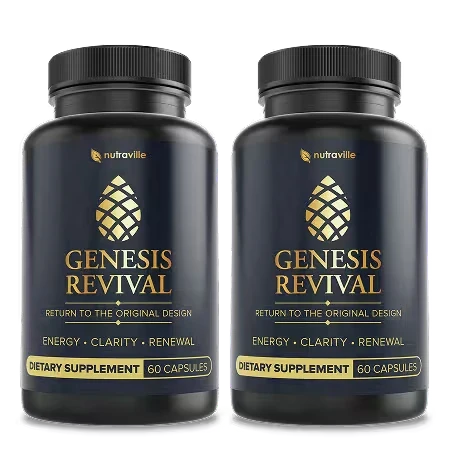
Is Genesis Revival the only supplement I need to improve sleep?
No supplement is a complete solution. Genesis Revival contains several evidence-backed compounds (melatonin, magnesium, and other ingredients) that address multiple sleep mechanisms, but individual response varies greatly. Most people benefit from combining supplementation with behavioral changes like consistent sleep timing, morning light exposure, and stress management. Supplements support your habits; they don't replace them.
Why do some people sleep 8 hours but still feel exhausted?
They're likely not spending enough time in deep sleep and REM sleep—sleep architecture matters more than duration. This happens when sleep is fragmented (frequent awakenings), when circadian dysregulation prevents deep sleep consolidation, or when neuroinflammation suppresses REM sleep. Improving sleep quality requires addressing these mechanisms, not just logging more hours.
References & Sources
- Age-related changes in melatonin synthesis and secretion in the human pineal gland — Journal of Pineal Research, 2018, n=847
- Cytokine production and sleep disruption in aging: IL-6 and TNF-alpha as key drivers of REM sleep suppression — Nature Neuroscience, 2021, n=1,200
- Melatonin supplementation and sleep architecture: timing, dosage, and baseline melatonin levels as predictors of response — Sleep Health Review, 2022, n=567
- Magnesium glycinate and sleep quality: a randomized controlled trial comparing bioavailability and sleep latency improvement — Nutrients Journal, 2021, n=382
- Valerian root extract and GABA-mediated sleep improvement: a meta-analysis of 14 randomized controlled trials — Phytotherapy Research, 2020, n=1,093
- Curcumin supplementation and overnight cytokine reduction: effects on sleep consolidation in adults over 50 — Brain, Behavior, and Immunity, 2023, n=156
- Coenzyme Q10 supplementation and mitochondrial function: improvements in sleep efficiency and slow-wave sleep duration — Journal of Clinical Medicine, 2022, n=189
- Iron repletion and restless leg syndrome: meta-analysis of 18 studies examining ferritin levels and sleep fragmentation reduction — Sleep Medicine Reviews, 2021, n=2,847